
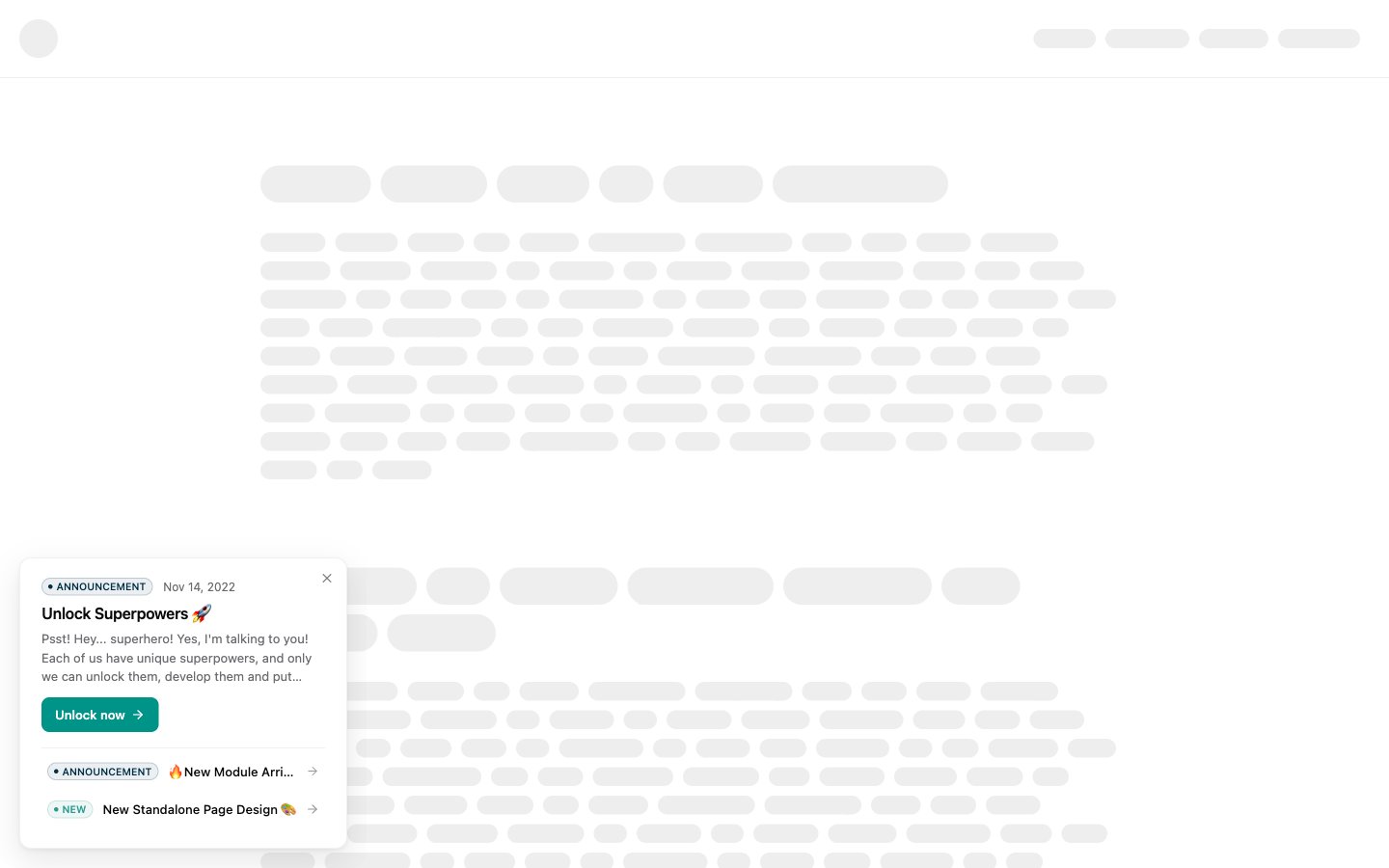
Turn on an announcement for an entry
Announcements are set per entry, not from a global switch. You choose whether each changelog entry becomes a pop-up when you write it.1
Open the changelog entry
Create a new entry from the Changelog screen with New entry, or open an existing draft. For the full walkthrough of writing and publishing, see Create changelog entries.
2
Enable In-app announcement
In the editor’s publish panel on the right, turn on In-app announcement. It sits alongside Notify subscribers (which sends an email) so you can decide, independently, how each update reaches your users.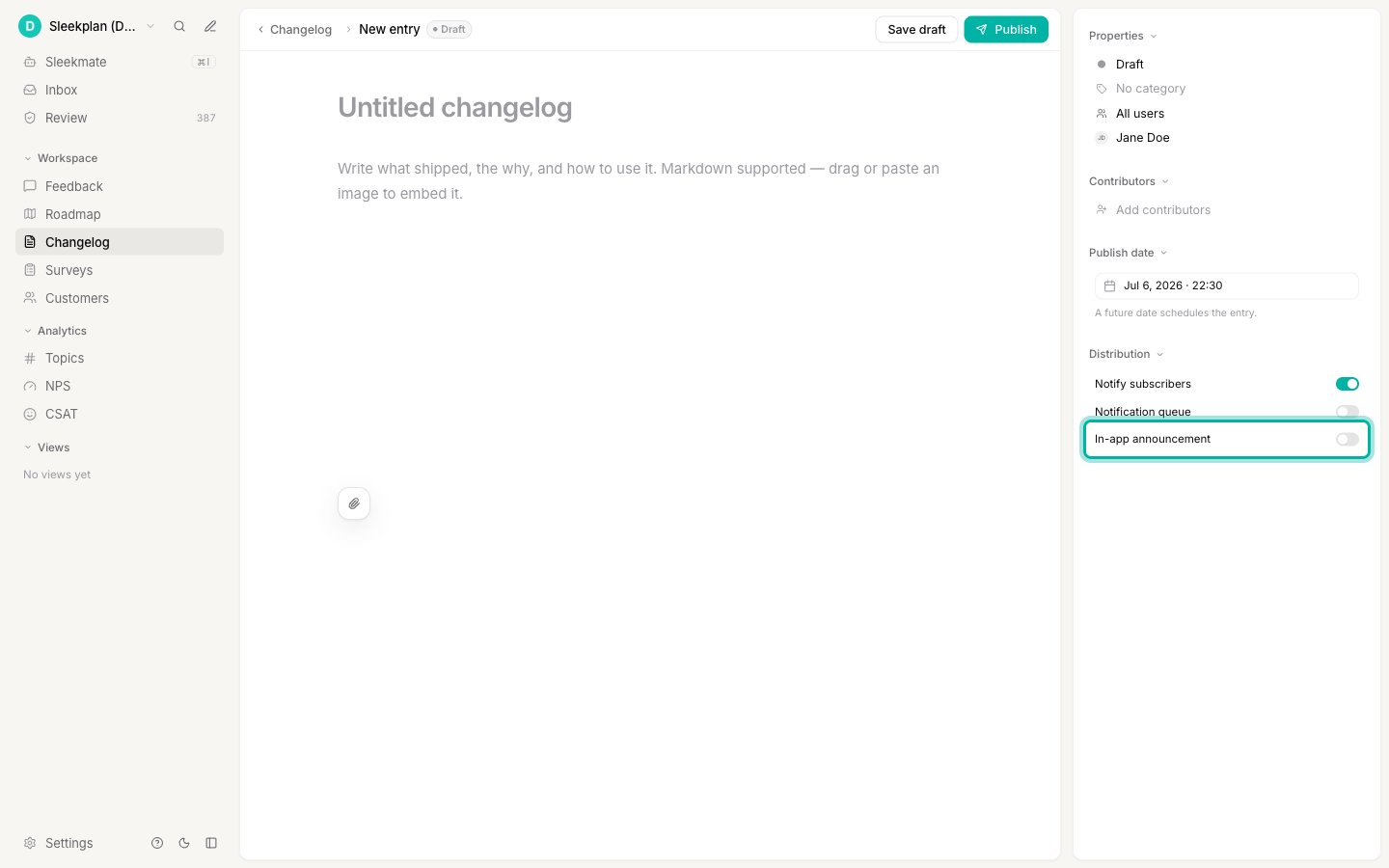
3
Publish the entry
An announcement only appears once the entry is published. Publish now, or schedule it for later, and the pop-up starts showing to users from that point.
In-app announcements are a plan feature with a monthly limit. Once you reach your plan’s announcement allowance, new entries stop showing as pop-ups until the limit resets. See Add-ons if you need more.
How announcements behave
A few rules keep announcements helpful rather than noisy:- Recent entries only. An entry is announced only if it was published within the last 30 days. Older entries stay in the changelog but no longer pop up.
- Shown once per user. Each user sees a given entry’s announcement one time. Reopening the widget will not show the same update again.
- A short queue, newest first. If several entries qualify at once, the newest leads the pop-up and a few more are bundled with it, so users get a single tidy “New Updates” moment rather than a stream of pop-ups.
- Not shown on top of other pop-ups. If another widget pop-up is already active, the announcement waits.
Target an announcement with segments
If you set an Audience on a changelog entry, its in-app announcement follows the same targeting. This lets you announce a change only to the users it affects.- An entry left on All users is announced to everyone who qualifies.
- An entry targeted at a user segment is announced only to signed-in users who match that segment. Users who are not signed in, or who do not fall into the segment, never see the pop-up.
Hide announcements on specific pages
Some pages are the wrong place for a “New Updates” pop-up: a public marketing page, a signup or login screen, or a checkout flow where any interruption can cost you a conversion. You can suppress announcements on those pages while keeping the rest of the widget fully functional. To do this, define a settings object before the Sleekplan embed script loads on that page:1
Add the setting before the embed script
Place the
window.SLEEK_SETTINGS snippet above the Sleekplan script tag on the page. It must run before the widget loads, because the setting is read when the widget first starts.2
Repeat only where you want it
Add the snippet only to the pages where announcements should stay hidden. Pages without it keep showing announcements as usual. If several pages share a header or template, adding it there once covers them all.
This only hides the in-app announcement pop-up. The rest of the widget (feedback, roadmap, changelog, and the notifications inbox) keeps working normally on that page.
Related
Create changelog entries
Write an entry, target a segment, and publish it as an announcement.
The changelog
Read the changelog list and manage every entry in your workspace.
Changelog settings
Configure how your changelog looks and behaves for users.
User segments
Build the audiences that decide who sees a targeted announcement.