
How templates work
Each of your categories can have its own template, and there is one extra Default template:- When someone starts a post in a category that has a template, that template prefills the description.
- When the category has no template of its own, the Default template is used instead.
- If neither exists, the composer opens empty, exactly as before.
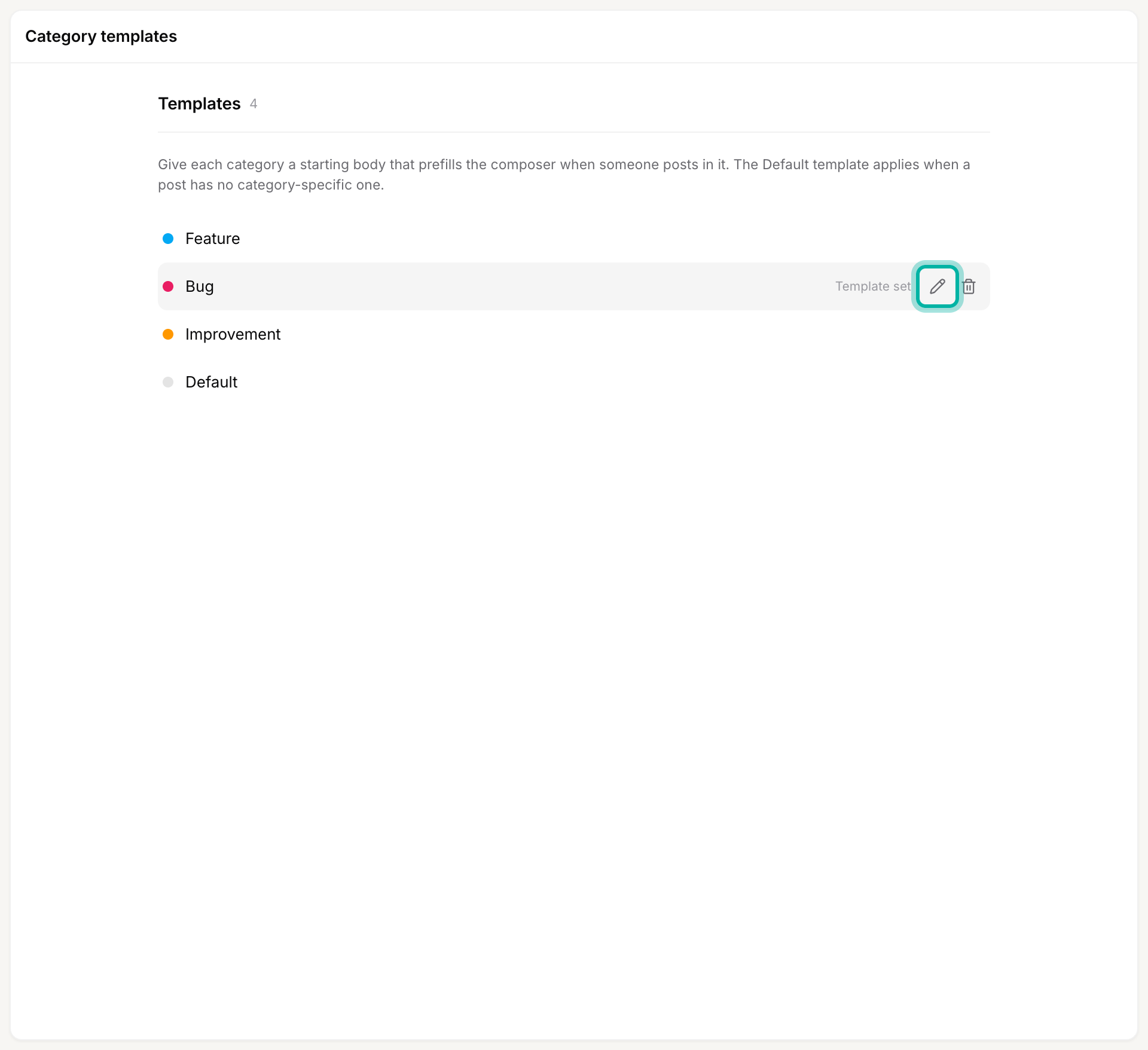
Set or edit a template
1
Open a category's template
Go to Settings → Category templates and click the category you want, or the pencil icon on its row.
2
Write the template
Compose the starting body in the editor. Markdown is supported, so you can use headings, lists, and links to lay out exactly what you want people to fill in.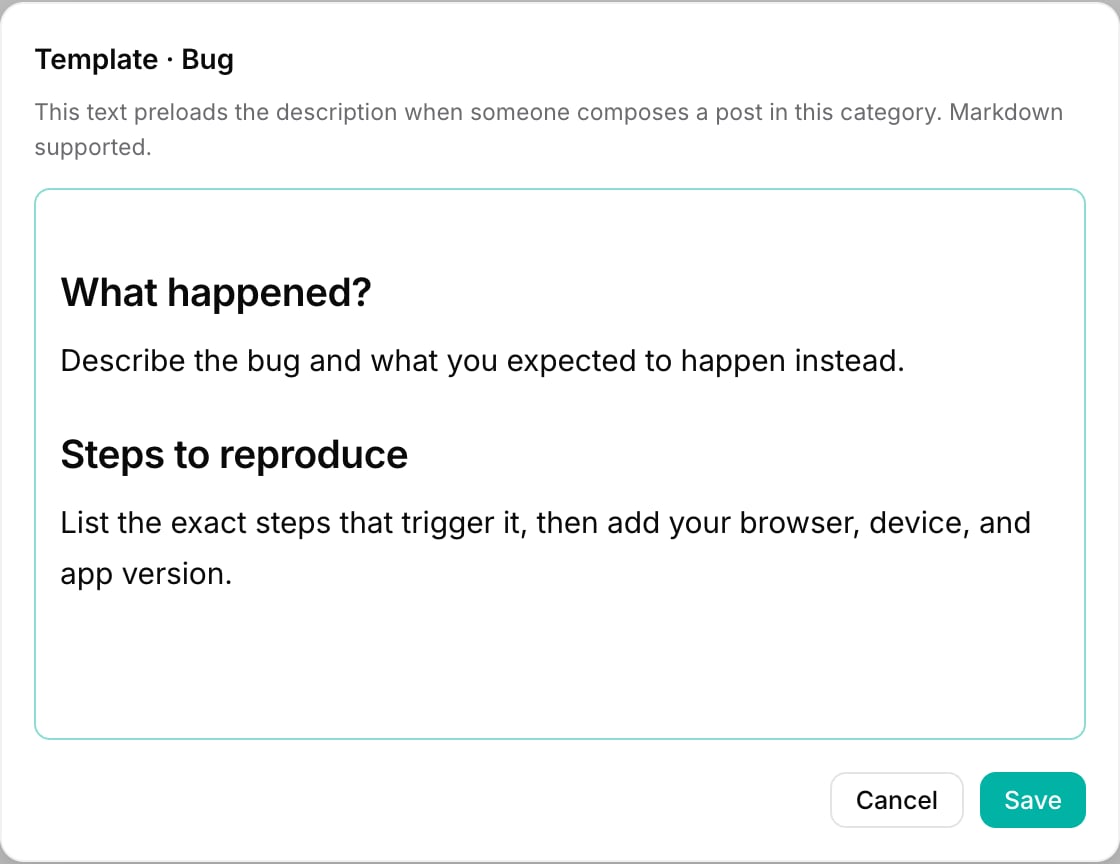
3
Save it
Click Save. From now on, new posts in that category open with this text already in place.
The Default template
The Default row at the bottom of the list is not a category. It is the fallback that prefills any post whose category has no template of its own. Set a Default template when you want every new post to start from the same base, and add category-specific templates only where a category needs something different.Delete a template
Hover a category that has a template and click the trash icon, then confirm. New posts in that category will no longer be prefilled (the Default template applies again if you have one). Deleting a template does not change any existing posts, and categories without a template simply show no trash icon.Related
Add, remove, and reorder categories
Manage the categories that each template belongs to.
Create a post
See where the template appears when you add a post from the dashboard.