
These settings act on the tags you have already created. Set up the tags you want to expose first, in Settings → Tags.
Let users apply tags when submitting
Turn on Let users set tags in the Submission & voting section to add a tag picker to the post form. Visitors can then choose from your existing tags when they create a post, so feedback arrives already labelled.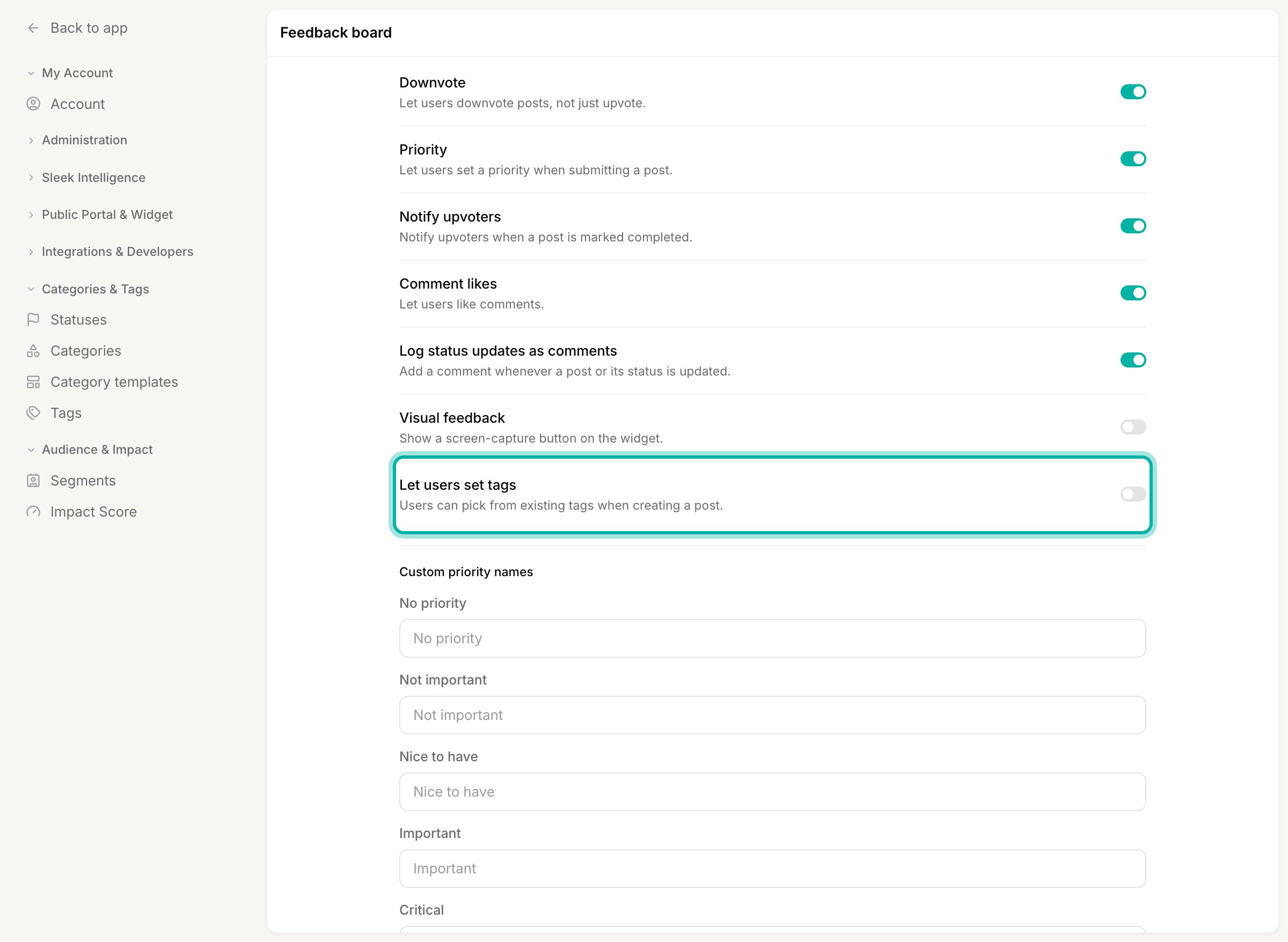
Let visitors filter by tag
Turn on Public tags in the Public board display section to show a tag filter on your public board. Visitors can then narrow the list to a single tag and browse only the posts that carry it.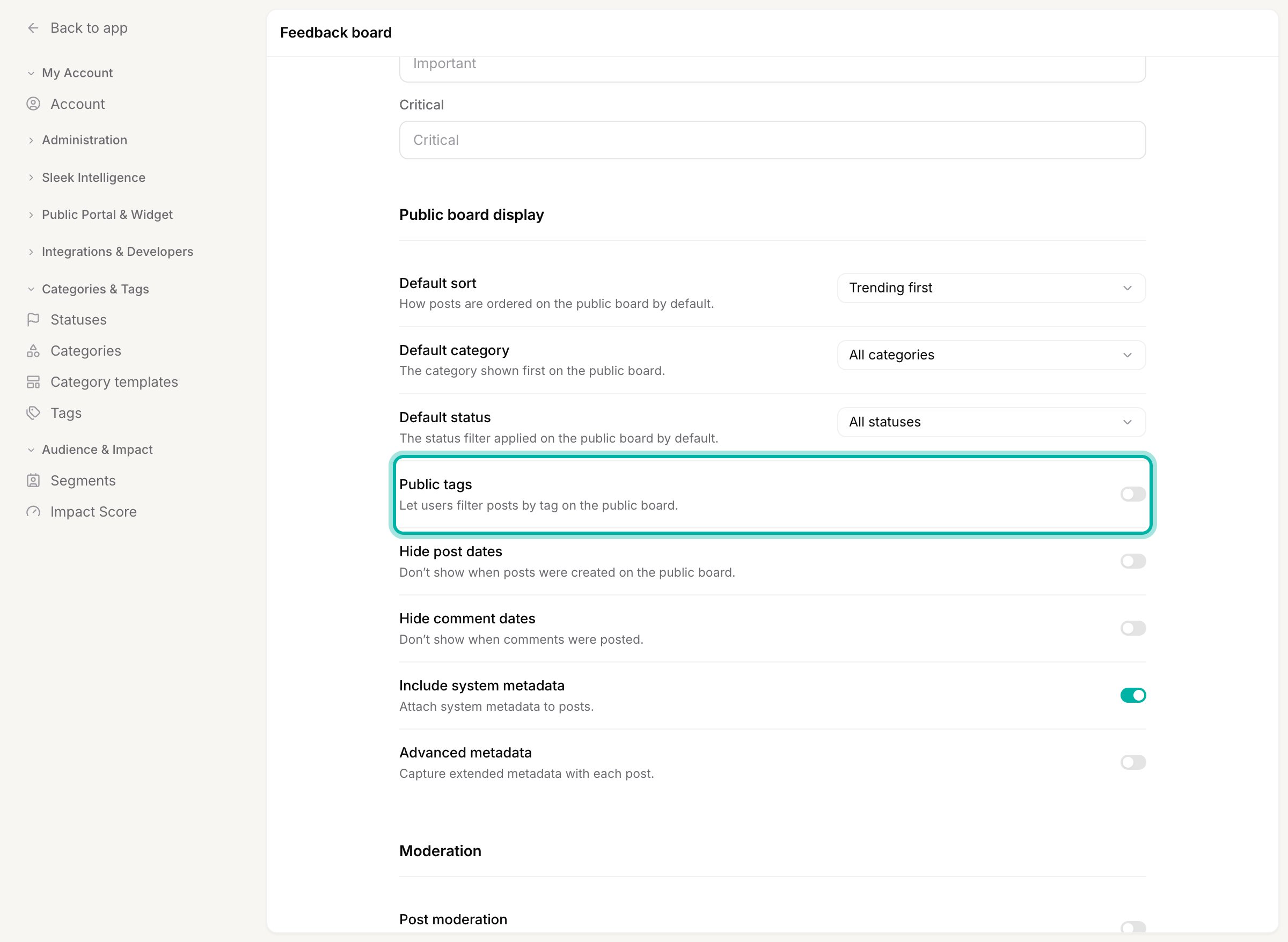
Mix and match
The two settings are independent, so you can combine them however you like:- Both off keeps tags fully internal. Your team still uses them as Labels on posts; users see nothing.
- Public tags only lets visitors filter by tags that you and your team apply, without letting them set tags themselves. Good when you curate the labels.
- Let users set tags only collects a tag on new posts but does not add a public filter.
- Both on gives you a fully public tag axis: users label their own posts and everyone can filter by those labels.
Related
Add and remove tags
Create the tags these settings expose.
Categories, components, tags, and statuses
Decide which axis your users should see and filter by.