
Changing these settings requires an Owner or Admin role on the workspace.
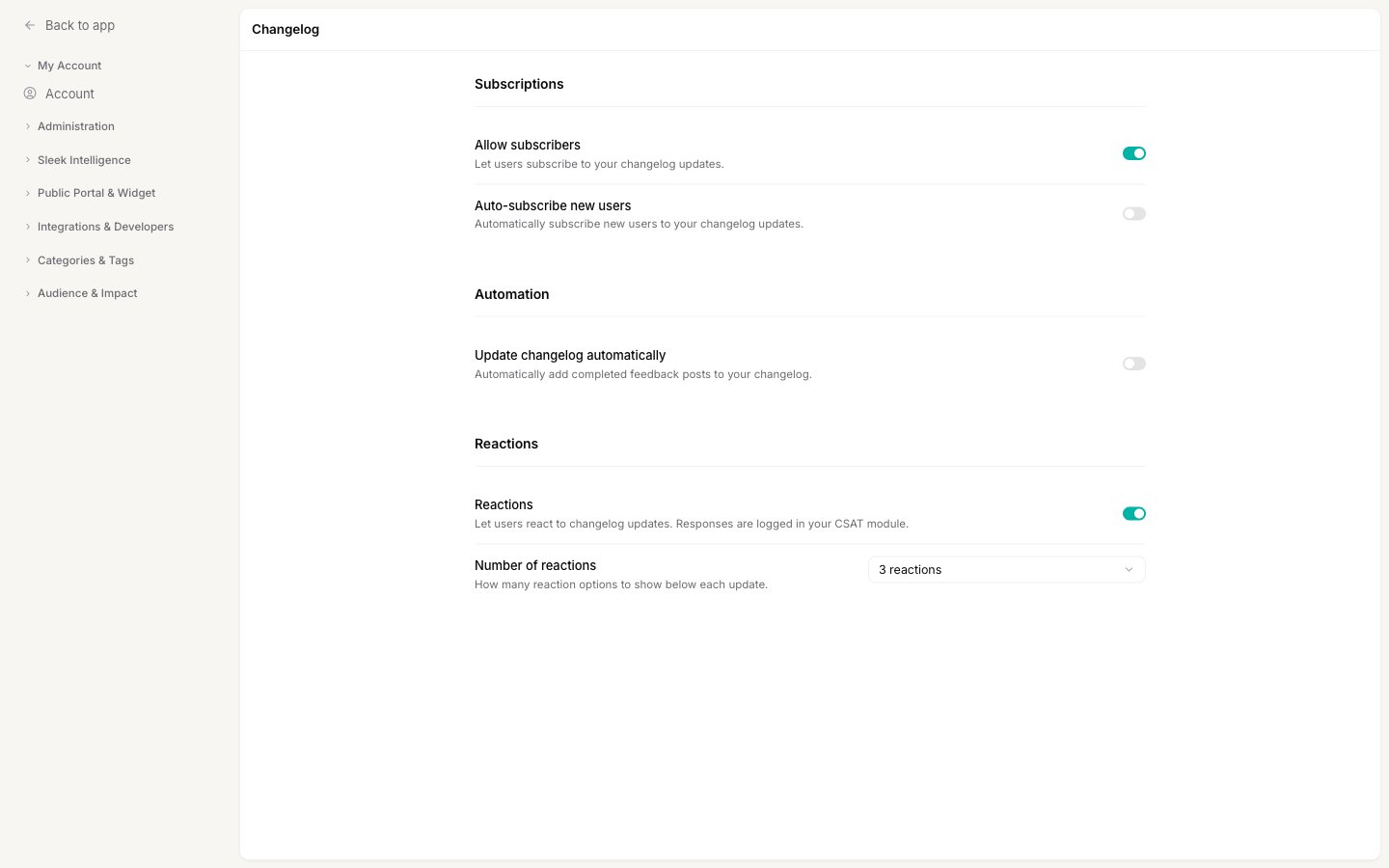
Subscriptions
Subscriptions let people follow your changelog so they hear about new updates without checking back. This is how you turn a one-time reader into a returning audience: when someone subscribes, they are notified every time you publish, which keeps your product improvements in front of the users who care.1
Open the Changelog settings
Go to Settings → Changelog and find the Subscriptions section at the top.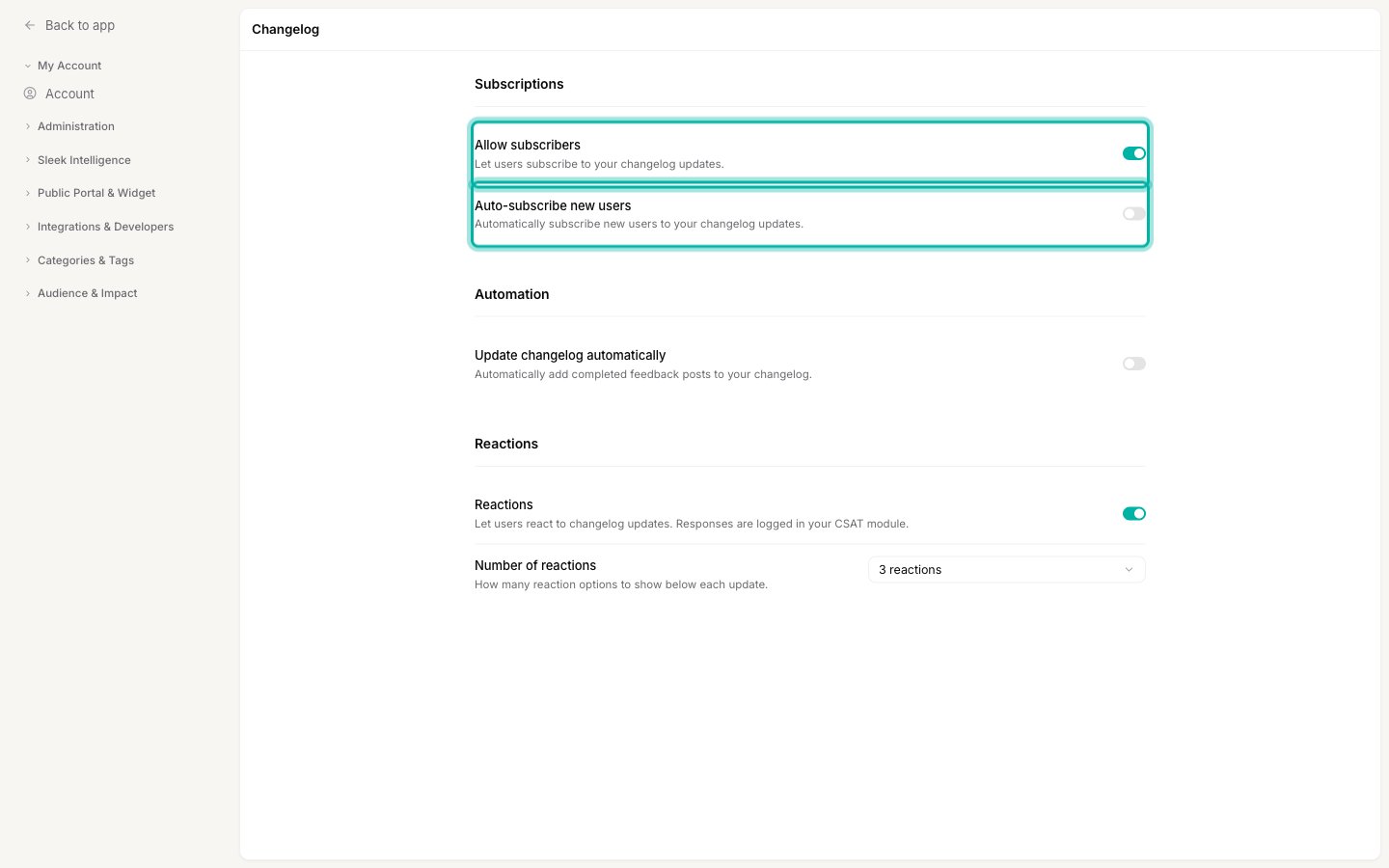
2
Let users subscribe to updates
Turn on Allow subscribers so visitors can opt in to your changelog updates. With this off, there is no way for readers to follow your changelog, so leave it on if you want an audience for your announcements.
3
Decide whether to subscribe new users automatically
Turn on Auto-subscribe new users to subscribe every new user to your changelog updates the moment they arrive, instead of waiting for them to opt in. This grows your reach fastest, but it also means people are subscribed without explicitly asking, so choose it based on how your users expect to be contacted. They can always unsubscribe later.
Automation
Keeping a changelog current is the hard part: every shipped feature is one more thing to remember to write up. Automation closes that gap by moving completed feedback into your changelog for you, so the work you already do in feedback becomes an announcement without a separate step.1
Open the Automation section
On the same Settings → Changelog screen, scroll to the Automation section.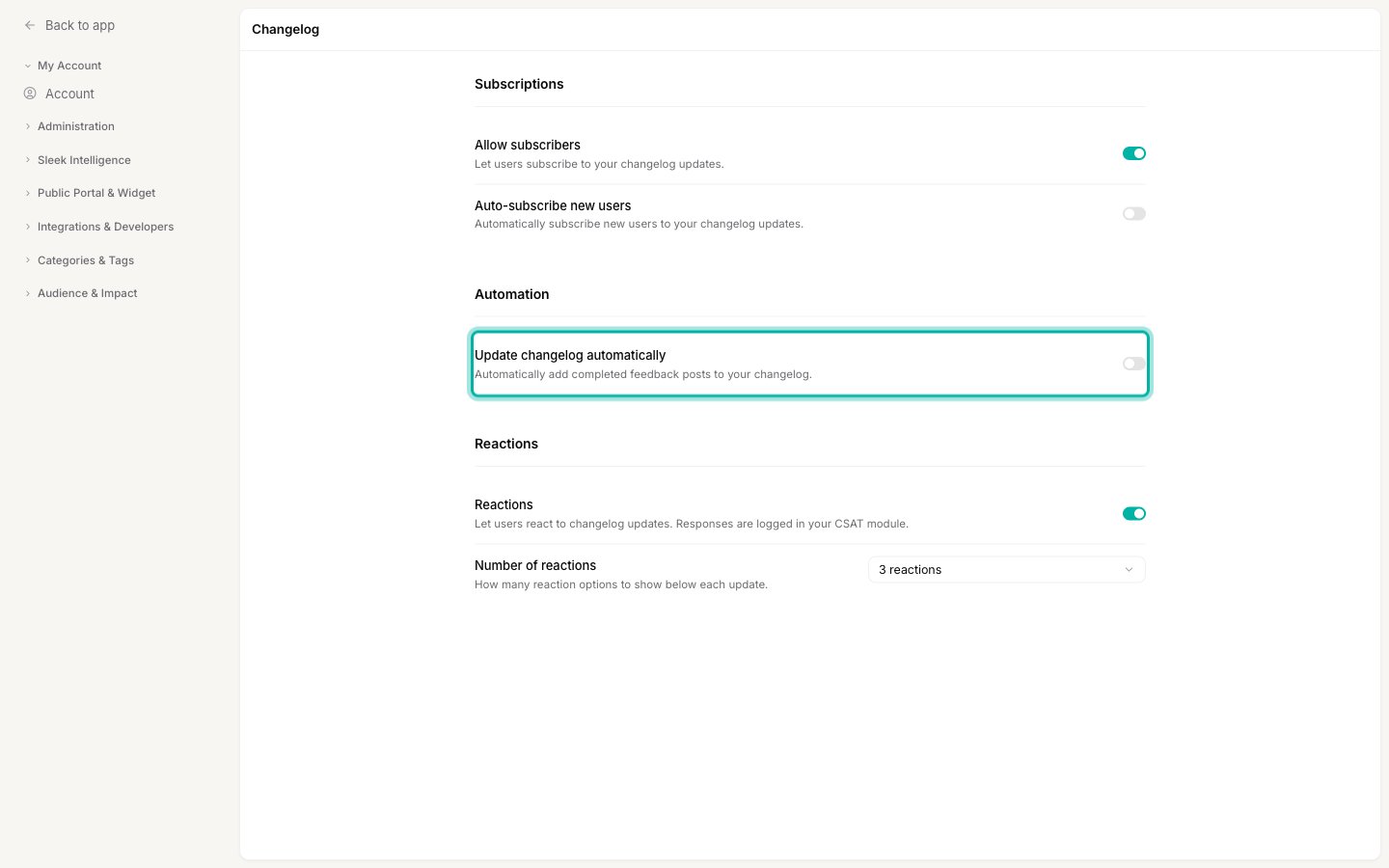
2
Publish completed feedback automatically
Turn on Update changelog automatically to add completed feedback posts to your changelog as they are marked done. This keeps your changelog fresh with no extra effort, which is ideal when your feedback statuses already track shipped work. If you prefer to hand-craft each announcement, leave it off and create entries manually instead.
Reactions
A changelog is a broadcast, but reactions turn it into a signal: they let readers tell you, in one click, how they feel about what you shipped. This gives you lightweight sentiment on every release without asking people to write a comment, and those responses feed straight into your satisfaction (CSAT) reporting so you can see which updates landed well.1
Open the Reactions section
On the Settings → Changelog screen, go to the Reactions section.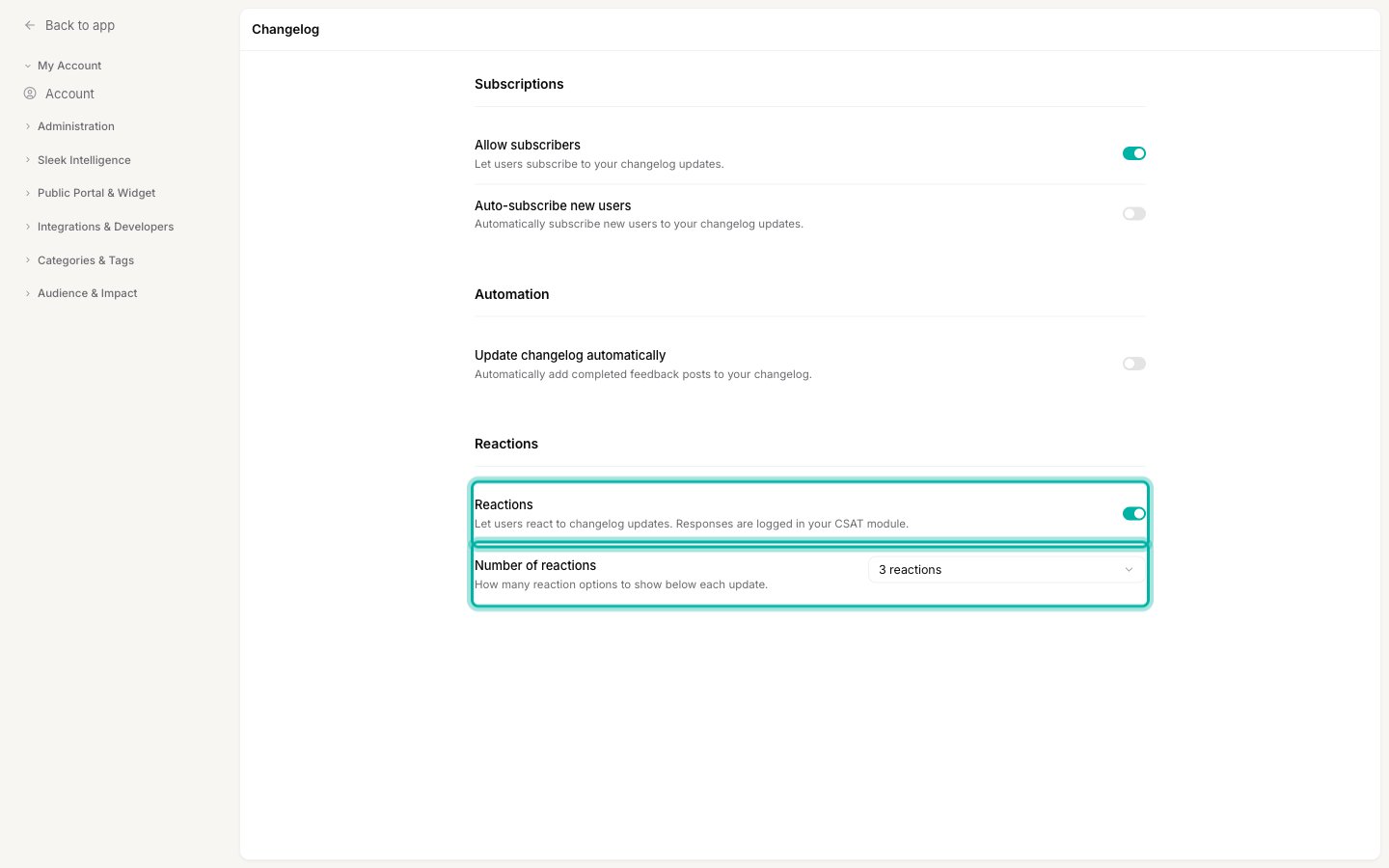
2
Let users react to updates
Turn on Reactions to show reaction options below each changelog update. Responses are logged in your CSAT module, so you can track how satisfied readers are with each release over time.
3
Choose how many reactions to show
With Reactions on, use Number of reactions to pick how many reaction options appear below each update: 2, 3, or 5. Fewer options make it a quick yes-or-no signal, while more options capture a finer range of sentiment. Start with 3 if you are unsure.
Related
The changelog
Understand what the changelog is and how it fits into your workspace.
Create changelog entries
Write, schedule, and publish individual changelog posts.
In-app announcements
Surface new updates to users right inside your product.
Changelog RSS feed
Let readers and tools follow your updates through a standard feed.