AI is changing how we build products, not who builds them. Will AI replace product managers? No. The work shifts. AI clears the path so product managers can focus on judgment, strategy, and customers. Tools like Sleekplan help process feedback in minutes, not weeks, so we can make clearer calls faster.
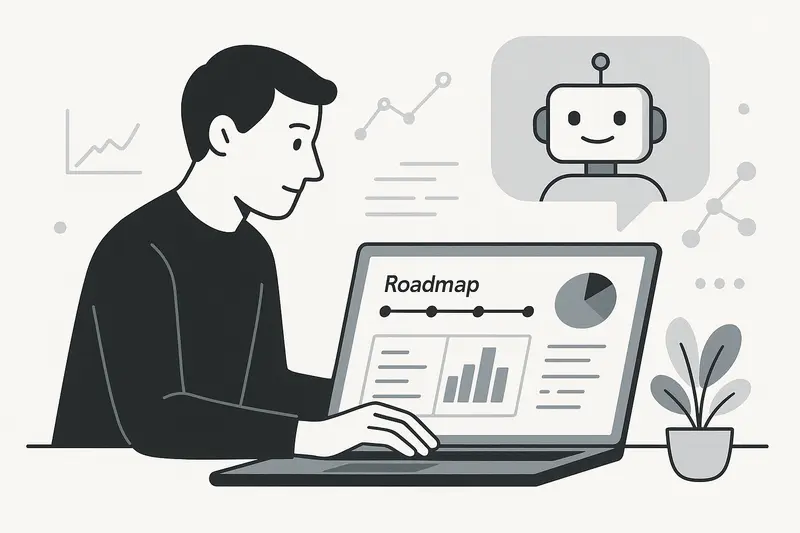
What AI is changing, not replacing
AI now handles the busywork: synthesis, first drafts, and data wrangling. Industry surveys show 65% of PMs already use AI in their workflow, and adoption is rising. That is not replacement, it is reallocation of time toward higher leverage work. McKinsey’s findings show a productivity bump without universal ROI at scale yet, which means we are still learning how to deploy AI well. The lesson is simple: pair automation with human judgment to unlock real value.
- Reference reading: Product School’s overview on AI and PM adoption makes the trend plain and practical: AI will not replace product managers.
What AI can actually do for product managers
AI excels at heavy lifting across routine tasks:
- Turn multichannel customer feedback into concise summaries and themes
- Draft PRDs, user stories, and release notes from notes or transcripts
- Flag anomalies in product metrics and surface insight candidates
- Propose A/B test variants and compile experiment readouts
If you want a practical walkthrough, we shared a hands-on playbook that covers real prompts, workflows, and gotchas: AI in product management use cases and playbook.
The human work AI cannot touch
Great product management is still human at its core.
- Empathy and field context: You do not learn the customer’s real job-to-be-done from a dashboard alone. Sitting with users reveals what surveys miss. Harvard Business School’s research shows AI suggestions only create value when humans apply sound judgment, not by default: human judgment drives innovation.
- Strategy under uncertainty: AI can rank options, it cannot choose your focus or say no to good but distracting ideas. Strategy is creative, not just analytical. A useful lens on this: why AI will not save a bad strategy.
- Translation and alignment: PMs broker clarity across engineering, design, sales, and leadership. That is negotiation, trust, and timing. No model runs that meeting for you.
- Craft and context: Knowing when a 1 percent usability lift beats a 10 percent feature bet is product sense built over years. Skills for this future are expanding, not shrinking, as outlined here: AI skills PMs need.
A practical model: PMs plus Sleekplan AI
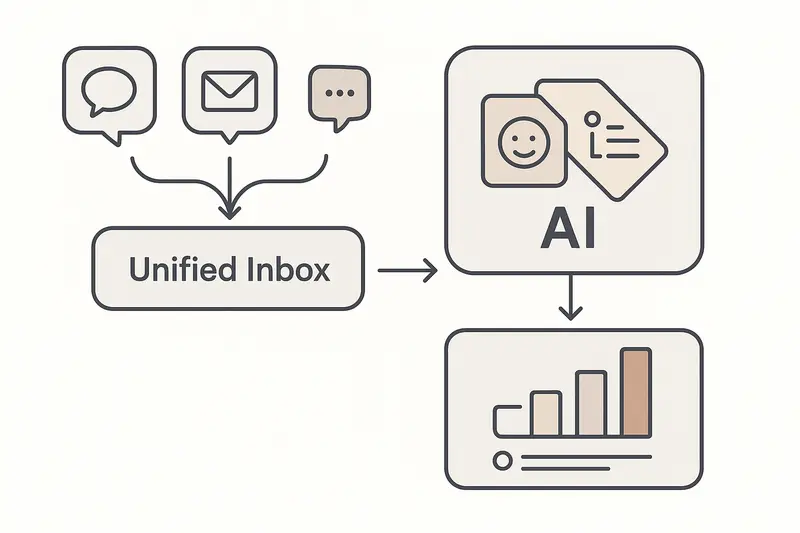
The fastest wins appear in feedback operations. Modern teams collect input from support, interviews, surveys, social, and in-product widgets. Manually, this becomes a swamp. With Sleekplan, all of that funnels into one place, ready for analysis: centralize product feedback.
Here is what changes:
- Instant summaries: Click to get the gist of long threads, then drill into verbatims when nuance matters. Real workflows, prompts, and examples live in our guide: AI PM playbook.
- Theme and sentiment detection: Spot emerging issues like “2FA login failures on mobile” early and quantify frustration vs delight.
- Impact scoring: Convert raw votes into weighted signals, so prioritization reflects customer segment, recency, and business context, not a popularity contest.
- Feedback-to-roadmap handoff: Move prioritized ideas straight into delivery plans and keep progress visible with statuses and dates: build and share a product roadmap.
- Clear release communication: Turn updates into concise notes, schedule announcements, and collect feedback on what shipped: Changelog features.
Fast answers to common questions
- Will AI replace product managers? No. AI automates routine work, while PMs own empathy, strategy, and alignment.
- Which PM tasks can AI automate? Feedback synthesis, draft documents, trend detection, and experiment summaries.
- Which PM skills stay human? Problem framing, prioritization under uncertainty, negotiation, and product storytelling.
- How do I start? Pilot one workflow end to end: centralize feedback, auto-summarize themes, review impact, then map to the roadmap. For prompts and daily patterns, use our guide on Claude for PMs.
Skills to level up in an AI-first workflow
- Field time: Conduct interviews, watch sessions, read verbatims before the summaries
- Diagnosis: Practice writing crisp problem statements before proposing features
- Decision hygiene: Define criteria, log tradeoffs, and revisit decisions post-launch
- Prompt craft: Give models clear context, examples, and constraints, then critique the output
- Communication: Share not just what changed, but why it matters and what you learned
A simple weekly playbook we use
- Monday: Review fresh themes and sentiment from centralized feedback, tag unknowns to investigate
- Tuesday: Draft PRDs or briefs from notes, then rewrite for clarity in two passes
- Wednesday: Sync with design and engineering, confirm scope, risks, and acceptance criteria
- Thursday: Update roadmap statuses and changelog entries, queue a customer-friendly note
- Friday: Re-read one interview end to end, add a personal takeaway, adjust priorities if warranted
The point is not speed for its own sake. It is clarity. AI clears noise so we can hear signal and then make better calls.
The outcome we are after
When AI does the heavy lifting, product managers earn back time for the hard, human work: understanding customers deeply, setting a sharp strategy, and building alignment that lasts beyond a single release. That is where outcomes move.
If you want the short version, here it is: AI will not replace product managers. It will replace the hours we waste on mechanical tasks. Our job is to use that time to think better and ship with intent.