Most people who look up Productboard pricing write down the wrong number. They count the product team, multiply by the price on the tier they like, and take that figure to finance. Productboard does not bill that way. It bills for maker seats, and the gap between your headcount and your maker count is the entire budget question.
What follows is what each plan costs, what the two seat types can actually do, and which capability sits behind which tier, so you can fill in a spreadsheet before you take a demo. Productboard’s own pricing page listed Free at $0, Plus at $19 per maker per month and Business at $59 per maker per month when we checked it on 20 September 2026, and every figure below is cross-checked against third-party listings, because a vendor page changes without notice and a dated, corroborated number survives that.
How does Productboard pricing work in 2026?
Productboard pricing is charged per maker seat across four plans: Free at $0, Plus at $19 per maker per month billed annually, Business at $59 per maker per month billed annually, and Enterprise on a custom quote. Billed monthly instead of annually, Plus is $25 and Business is $75. Business carries a two-maker minimum and Enterprise a five-maker minimum.
| Plan | Annual, per maker / month | Monthly, per maker / month | Maker minimum | Contributors |
|---|---|---|---|---|
| Free | $0 | $0 | None stated | 25 |
| Plus | $19 | $25 | 1 | 25 |
| Business | $59 | $75 | 2 | 25 |
| Enterprise | Custom | Custom | 5 | Unlimited |
The independent listings agree on the shape and disagree on the labels. G2’s pricing listing shows the same four plans at $0, $19 and $59 with the two-maker and five-maker minimums attached. Capterra quotes the monthly side, starting at $25 per user per month with a free plan available. Vendr still uses the older tier names Essentials and Pro, at $20 to $25 and $60 to $80 per maker per month. If a comparison article names a plan you cannot find in the app, that is why: the tier names have moved and the listings lag behind them.
What is a maker seat in Productboard?
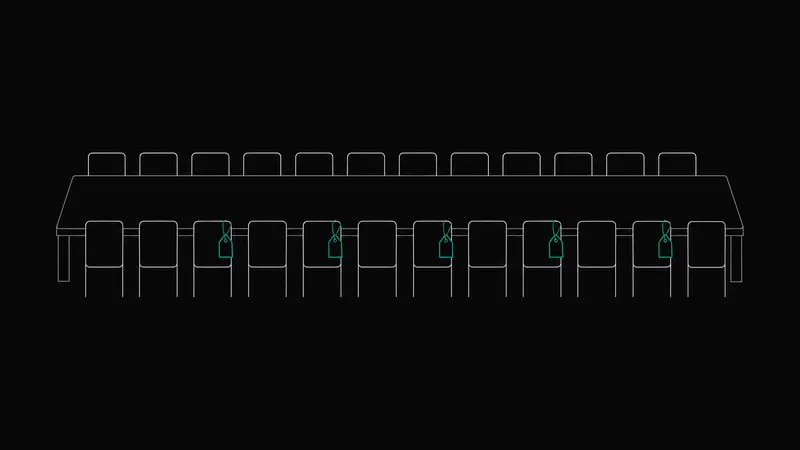
A maker seat is the paid seat, and it belongs to whoever owns product strategy inside the workspace. Productboard’s pricing page, checked on 20 September 2026, describes makers as the product managers and leads who create roadmaps, prioritize features and manage insights, and states that pricing is based on the number of makers in your workspace. Contributors are the colleagues who submit feedback, tag insights and collaborate through documents and comments, and they do not count toward the maker limit.
That distinction is the pricing model, and it is genuinely good news for a company with a wide stakeholder base. A support lead who forwards customer quotes, a designer who comments on a spec and an account executive who wants to see what ships next quarter can all be contributors. None of them moves the bill.
The trap runs the other way. Anyone who needs to change a status, reorder a roadmap or run prioritization needs a maker seat. Teams who work inside the tool together, rather than reading it, tend to find this out in month two, when the second and third PM both need edit rights and the line item doubles.
The contributor cap is the part buyers miss
Contributors avoid the maker charge, but they are not unlimited until Enterprise. Productboard’s pricing page lists 25 contributors on Free, on Plus and on Business, and unlimited contributors only on Enterprise. The “you only pay for makers” story holds cleanly up to 25 non-maker colleagues, and past that it becomes a sales conversation.
At a 40-person company where most of customer success and sales want visibility, that ceiling arrives long before the maker count does. Work out both numbers before you choose a tier: how many people need to edit, and how many need an account at all. If the second number clears 25 while the first stays small, you are being routed to a custom quote by the cheaper seat type, which is an odd reason to end up in procurement. Tools that keep feature request collection open to everyone price that side differently.
What a team of 5, 15 and 50 actually pays
Your row in the table below is your maker count, not your headcount. Count the people who will create roadmaps, prioritize features and manage insights; everyone else is a contributor, up to the cap.
| Maker seats | Plus, billed annually | Business, billed annually | Business, billed monthly |
|---|---|---|---|
| 2 | $456 / year | $1,416 / year | $1,800 / year |
| 5 | $1,140 / year | $3,540 / year | $4,500 / year |
| 15 | $3,420 / year | $10,620 / year | $13,500 / year |
| 50 | $11,400 / year | $35,400 / year | $45,000 / year |
Those are the list prices multiplied out, and they carry two caveats. Productboard prints the two-maker minimum on Business next to the words “billed annually”, so confirm in writing that a monthly Business subscription is open to you before you plan around the monthly column. And at 50 makers you are almost certainly in a negotiated contract rather than paying list.
Procurement data backs that up. Vendr reports a median Productboard buyer paying $24,280 a year across 235 purchases, with a range from $7,728 to $78,666 and an average saving of 21 percent off list. Set that median against the $59 to $80 per maker band the listings show and the typical Productboard customer is carrying somewhere between 25 and 34 maker seats. That is a real product organization, not a startup with two PMs.
What the annual commitment actually does
Annual billing takes 24 percent off Plus and 21 percent off Business, and it makes shrinking slow. The $19 annual rate against the $25 monthly rate on Plus saves $6 per maker per month, and $59 against $75 on Business saves $16. Across 10 makers on Business that is $1,920 a year, which is a real number rather than a rounding difference.
The cost is flexibility in one direction only. Productboard’s billing documentation, checked on 20 September 2026, says that on a yearly subscription you can add seats at any time and are charged a prorated amount, while seats you remove do not take effect until your renewal date and are not refunded for the remaining days. Growing is instant, shrinking is annual. If your maker count is about to move because a team is forming or being folded in, that asymmetry matters more than the 21 percent.

Which capability sits behind which tier?
The three gates that move a buyer up a tier are feedback volume at Plus, the customer portal at Business, and security plus Salesforce at Enterprise. Most of the rest follows from those three.
| Tier | What it adds over the tier below |
|---|---|
| Free | 500 feedback notes, 25 contributors, 50 AI credits a month |
| Plus | 500 feedback items, manual and dynamic customer segments, product usage integrations with Amplitude and Mixpanel, 250 AI credits per maker per month |
| Business | Unlimited feedback notes, unlimited teamspaces, 2 product portals with customization, moderation, embedding and portal SSO, custom voting questions and scale, dependency tracking, customizable feature statuses, board access controls, 500 AI credits per maker per month |
| Enterprise | Unlimited contributors, SAML SSO and SCIM provisioning, custom roles and permissions, Salesforce integration, AI Themes, a whitelabeled portal, 800 AI credits per maker per month |
Two of those gates catch people out. The product portal, the part your customers actually see, arrives at Business, so the tier you need is decided by whether you want a public roadmap and voting board at all, not by the size of your team. SAML SSO sits at Enterprise, which is where a security review will land you regardless of how many makers you have.
AI credits are metered per maker per month rather than pooled across the workspace, so an upgrade raises the allowance for every maker at once. Watch that row if your team leans on Spark, Productboard’s built-in AI, for summarizing feedback.
Who is Productboard actually right for?
Productboard fits a product organization with several full-time PMs, a large body of customer feedback to sort, and a stakeholder group that is wide but under 25 people. That is the shape the pricing is built around: the maker model rewards you for having many readers and few editors, and the Business feature set assumes you are running real prioritization rather than collecting requests in a list.
It is oversized in three cases. When everyone on a small team needs edit rights, per-maker pricing loses its advantage and you pay close to a per-seat rate anyway. When more than 25 people need an account, contributor count alone pushes you into a custom quote. And when the job is collecting requests, showing a roadmap and publishing a changelog, a portfolio management platform is a heavy way to do it.
None of that makes Productboard a bad tool. The Vendr spread, $7,728 at the bottom and $78,666 at the top, is the range of a product that scales into large organizations, and scaling into large organizations is what it does well. The only question is whether your job is the one it is priced for.
How to price it before you call sales
Write three numbers down before you book the demo: makers, contributors, and the date your current contract ends. Makers set the line item, contributors decide whether you clear the 25-person ceiling, and the renewal date is your real negotiating position, given that the buyers in Vendr’s dataset average 21 percent off list.
Then price the alternative honestly. If the quote lands at Enterprise for reasons that have nothing to do with the size of the product team, compare it against flat-plan tools before you sign: Sleekplan’s pricing puts Starter at $13 a month billed yearly with three team seats included and Business at $38 a month with ten, so the seat math runs in the opposite direction.
For the wider field, our roundup of Productboard alternatives sorts the options by scenario rather than by feature count.