What is idea management software?
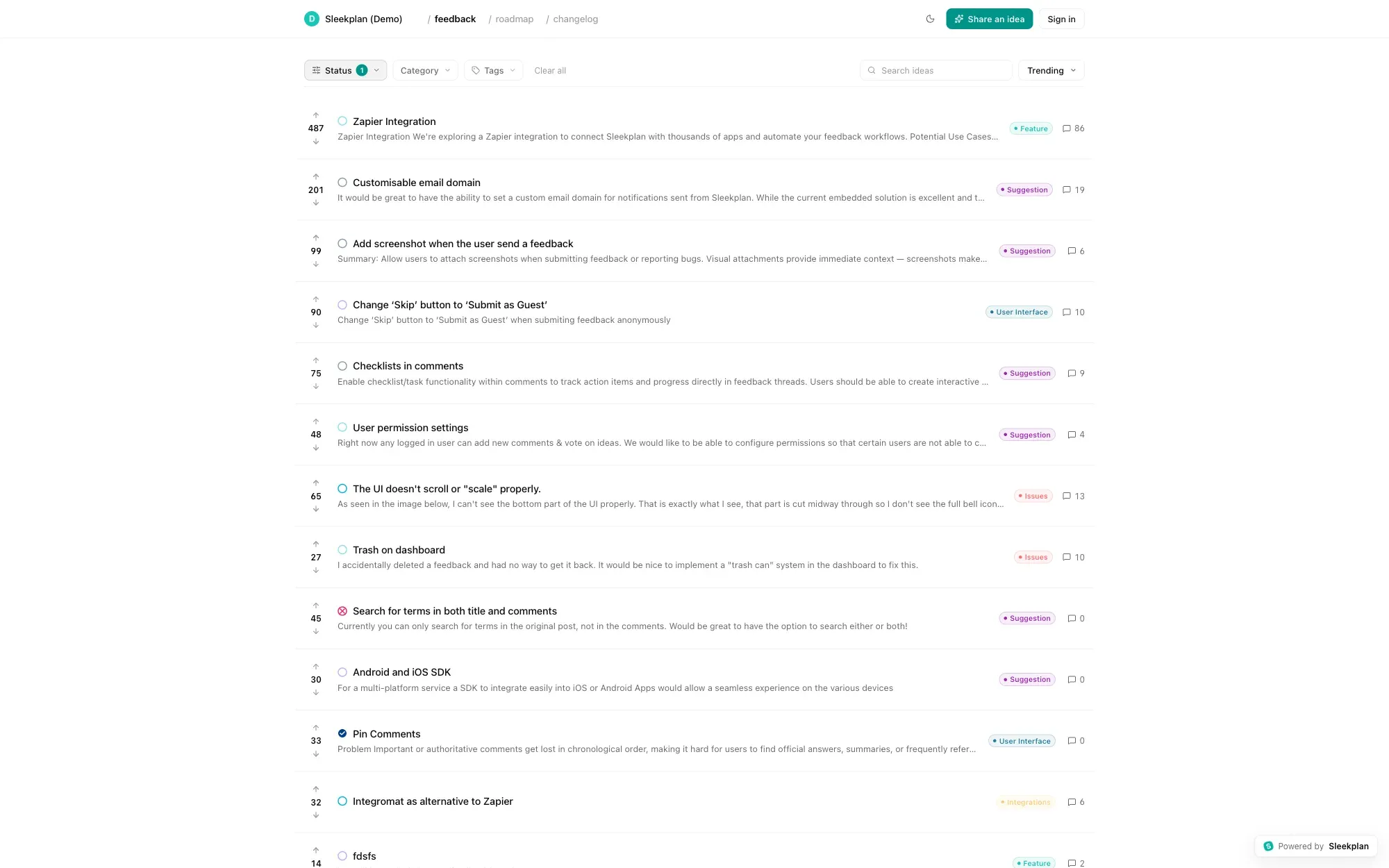
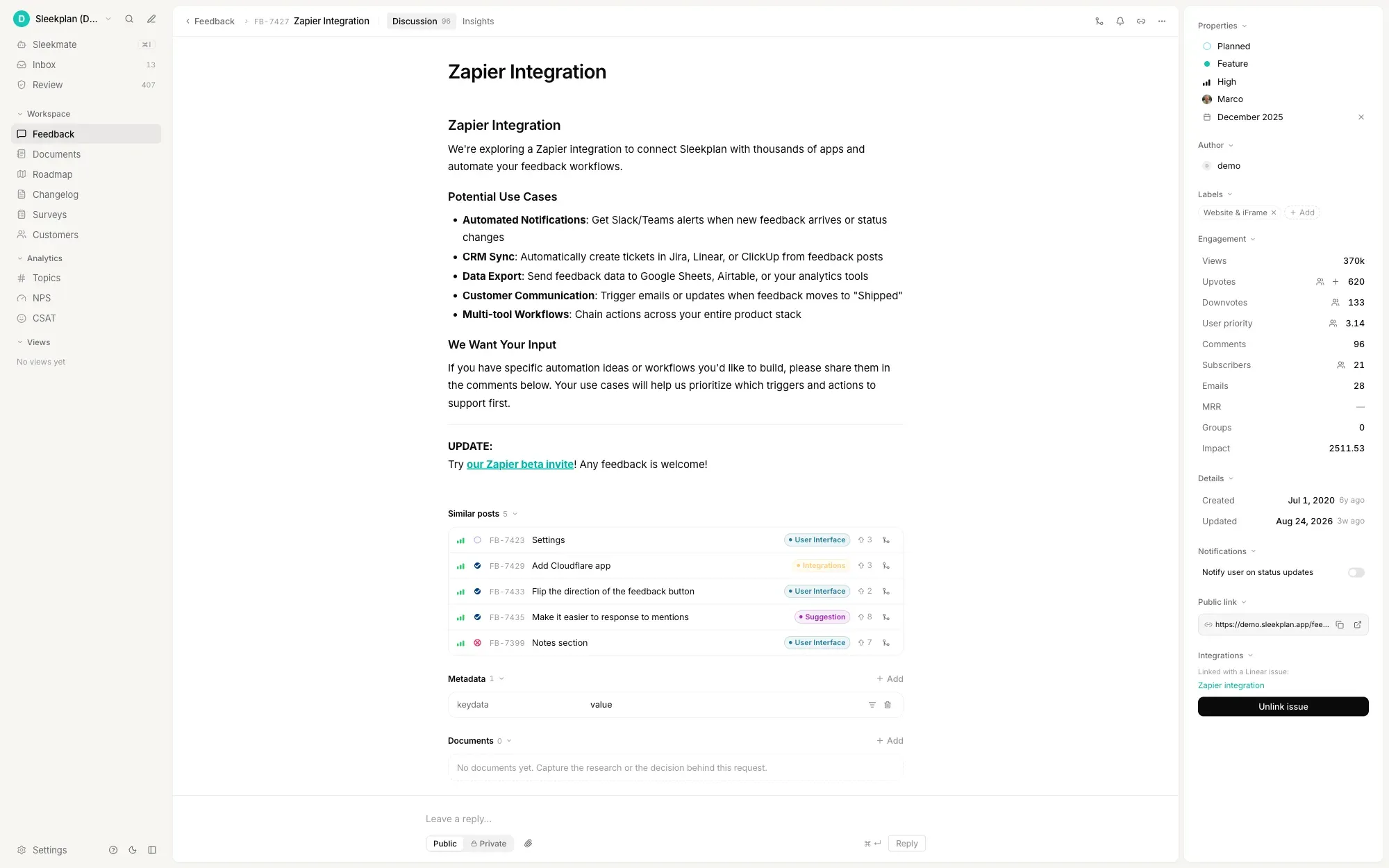
Idea management software is a single place to collect ideas, decide which are worth doing, and tell people what happened. The ideas can come from customers, from your own employees, or from both. The tools worth paying for do four things: capture an idea with enough context to act on it, remove duplicates, rank what is left by something better than loudness, and close the loop when something ships.
Two different markets share one name
Search for idea management software and you will meet two categories wearing the same label. One is enterprise innovation management: stage-gate funnels, innovation portfolios and company-wide campaigns, usually sold to an innovation office. The other is product idea management: customer requests, votes, roadmaps and release notes, owned by a product team. They solve different problems at very different prices. Sleekplan is the second kind.
If you need to run a formal innovation programme with scoring committees and stage gates, the enterprise vendors are a better fit. If you need a place where ideas land, get voted on, and turn into shipped features, read on.
What to look for
- Frictionless capture — an embedded widget beats a form behind a login. The further someone has to travel to file an idea, the fewer ideas you hear about.
- Automatic deduplication — the same idea arrives many times in different words. Without dedupe, a board becomes noise within a quarter.
- Weighted prioritisation — raw vote counts favour the loudest users. An idea from a customer paying thousands a month is not the same as one from a trial account.
- Access control — an internal idea board and a public customer board have opposite privacy needs. One tool should cover both.
- A closing loop — status changes should notify whoever asked. Without that, people stop contributing.
Running an internal idea board
Not every idea belongs in public. A Sleekplan board can be public, password protected, restricted to a list of email domains, or gated behind single sign-on using JWT or SAML. Restricting to your own domain turns the same board into an employee suggestion box: staff sign in with the identity they already have, vote on each other's ideas, and see what was decided. Nothing leaks to customers, and you are not running a second tool to get it.
Why Sleekplan
Sleekplan gives you the board, the voting, the duplicate detection, the impact scoring, the public roadmap and the changelog in one product, billed once. Ideas are weighted by the customer attributes you send us, near-duplicates get linked instead of piling up, and every contributor hears back when their idea moves. You can start free and have a board collecting ideas the same afternoon. Try it free.